What Water Extraction Involves
Water extraction removes standing and absorbed water before structural drying begins.
It is commonly required after burst pipes, appliance failures, overflowing fixtures, flooding, and storm-related water intrusion.
Removing bulk water quickly reduces the amount of moisture that building materials and drying equipment must handle.
Signs You Need Water Extraction
- Standing water on floors
- Saturated carpet or padding
- Water pooling under furniture
- Flooded basements or crawlspaces
- Water trapped beneath flooring
- Large amounts of water after a pipe break
How the Work Is Done
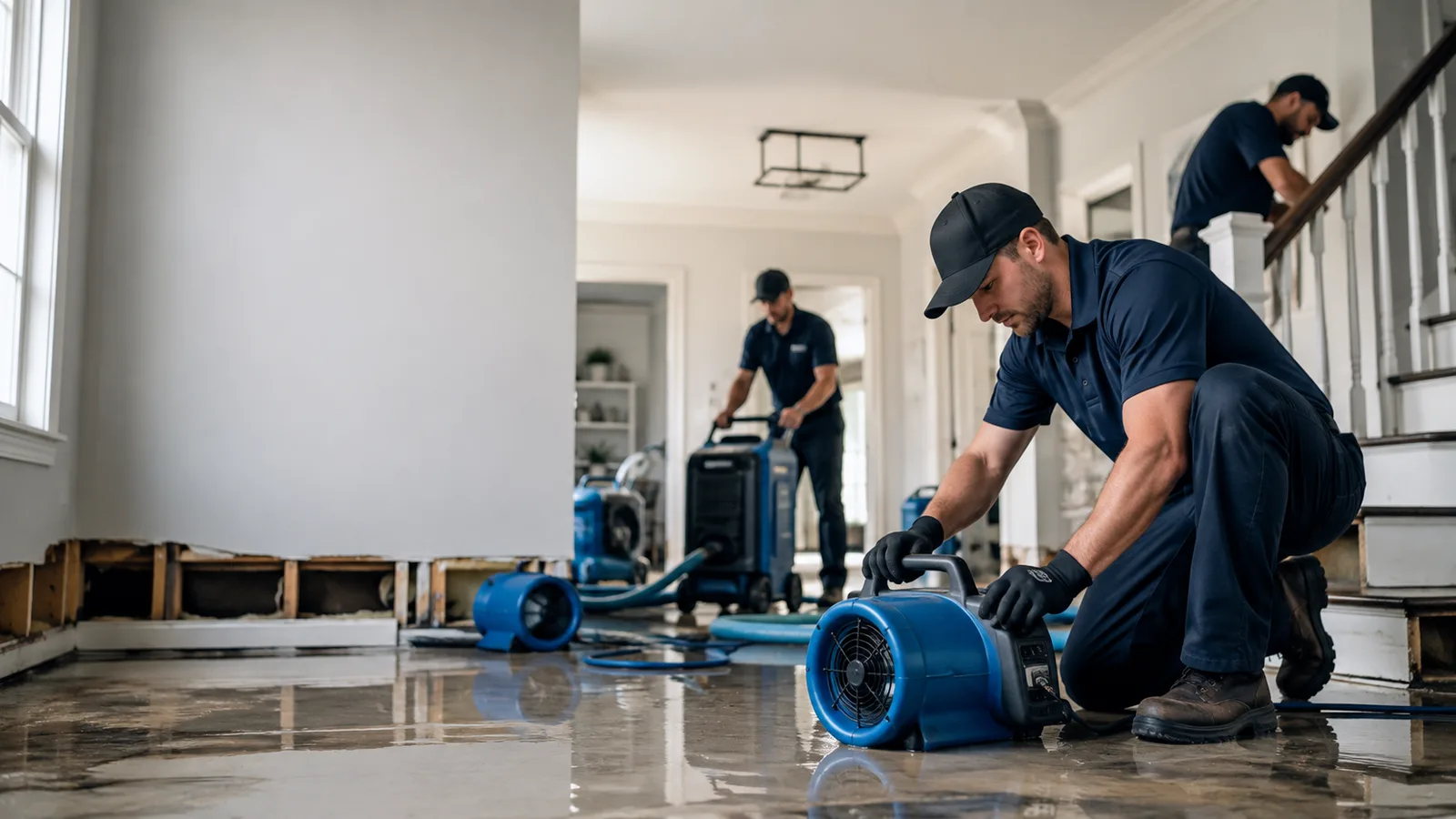
Technicians first identify the water source and affected areas.
Submersible pumps can remove significant amounts of standing water. Portable extractors and truck-mounted extraction systems are used for carpet, flooring, and smaller water losses.
Saturated carpet padding may need removal rather than repeated extraction.
Technicians also check floor transitions, cabinets, wall cavities, and other areas where water can remain hidden.
After bulk extraction, air movers and dehumidifiers are used to remove remaining moisture.
What Drives the Cost
Cost depends on water volume, affected square footage, flooring type, accessibility, extraction points, equipment requirements, contamination level, and hidden water migration.
Restore Pro provides professional water extraction throughout the United States.