What Water Damage Repair Involves
Water damage repair addresses building materials that remain damaged after the water source has been controlled and affected areas have been properly dried.
Typical repairs can involve drywall, flooring, ceilings, trim, insulation, subfloors, and other building components.
The goal is to replace only materials that cannot be reasonably restored.
Signs You Need Water Damage Repair
- Swollen or crumbling drywall
- Buckled wood or laminate flooring
- Stained or sagging ceilings
- Damaged baseboards and trim
- Delaminated flooring
- Soft or deteriorated subfloors
How the Work Is Done
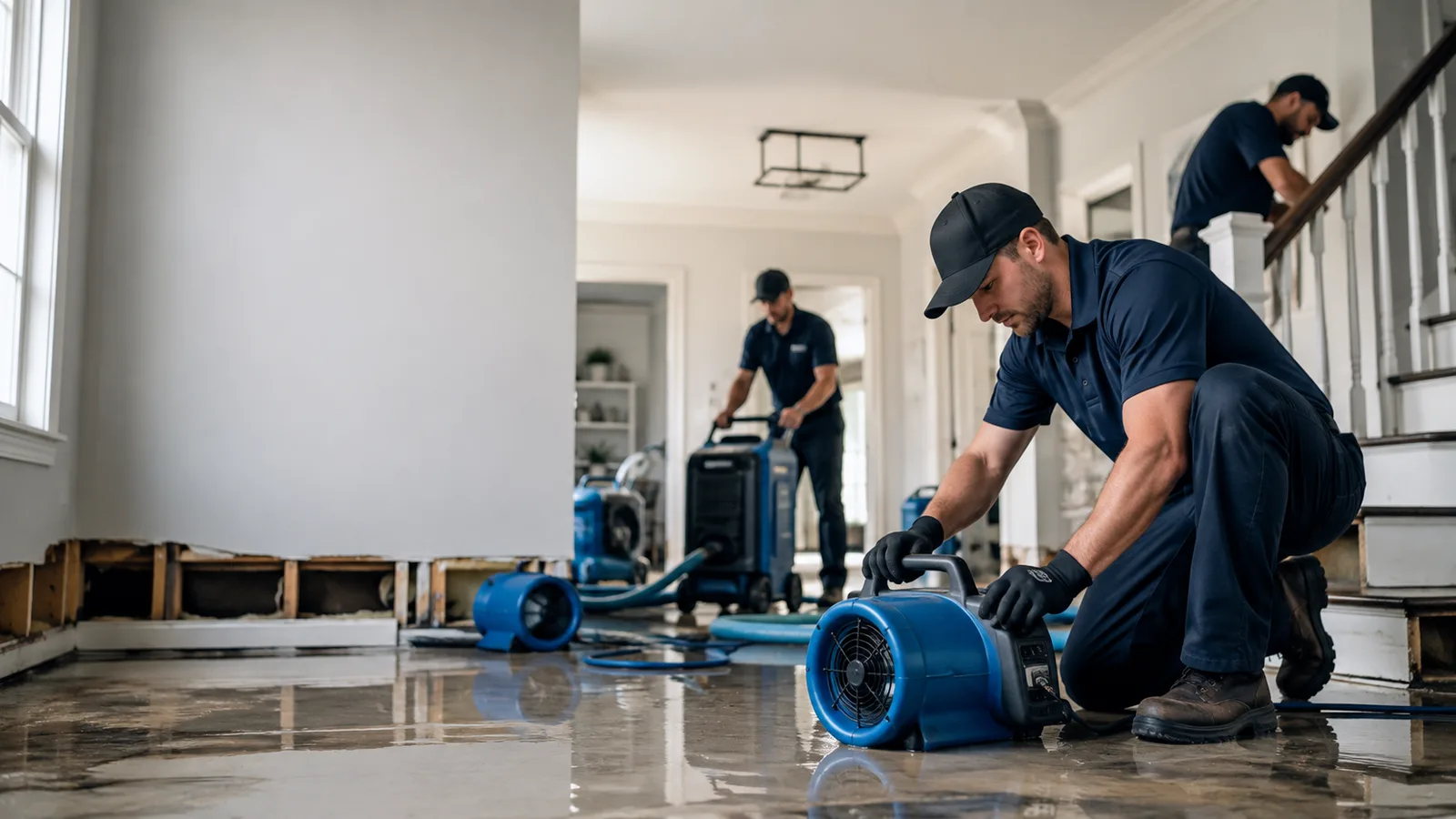
Inspection and moisture testing come first. Technicians determine whether affected materials are dry enough for repair.
Damaged drywall is cut back to sound material when necessary. Wall cavities are inspected for hidden moisture before replacement.
Flooring is evaluated according to its material. Some hardwood can be dried and refinished, while severely damaged or delaminated flooring may require replacement.
Subfloors are checked before new finish flooring is installed. Once materials are dry and stable, repairs and replacements are completed.
What Drives the Cost
Cost depends on material type, square footage, demolition requirements, accessibility, number of rooms, finish quality, subfloor condition, replacement materials, and repair complexity.
Restore Pro provides water damage repair throughout the United States.